
$30 Billion Available for Mesothelioma Patients
Even decades later, filing a claim will help you afford treatment through financial compensation. The claim process will not interfere with treatment, and filing your claim costs nothing out-of-pocket.



Justice Begins with a Legal Team You Can Trust
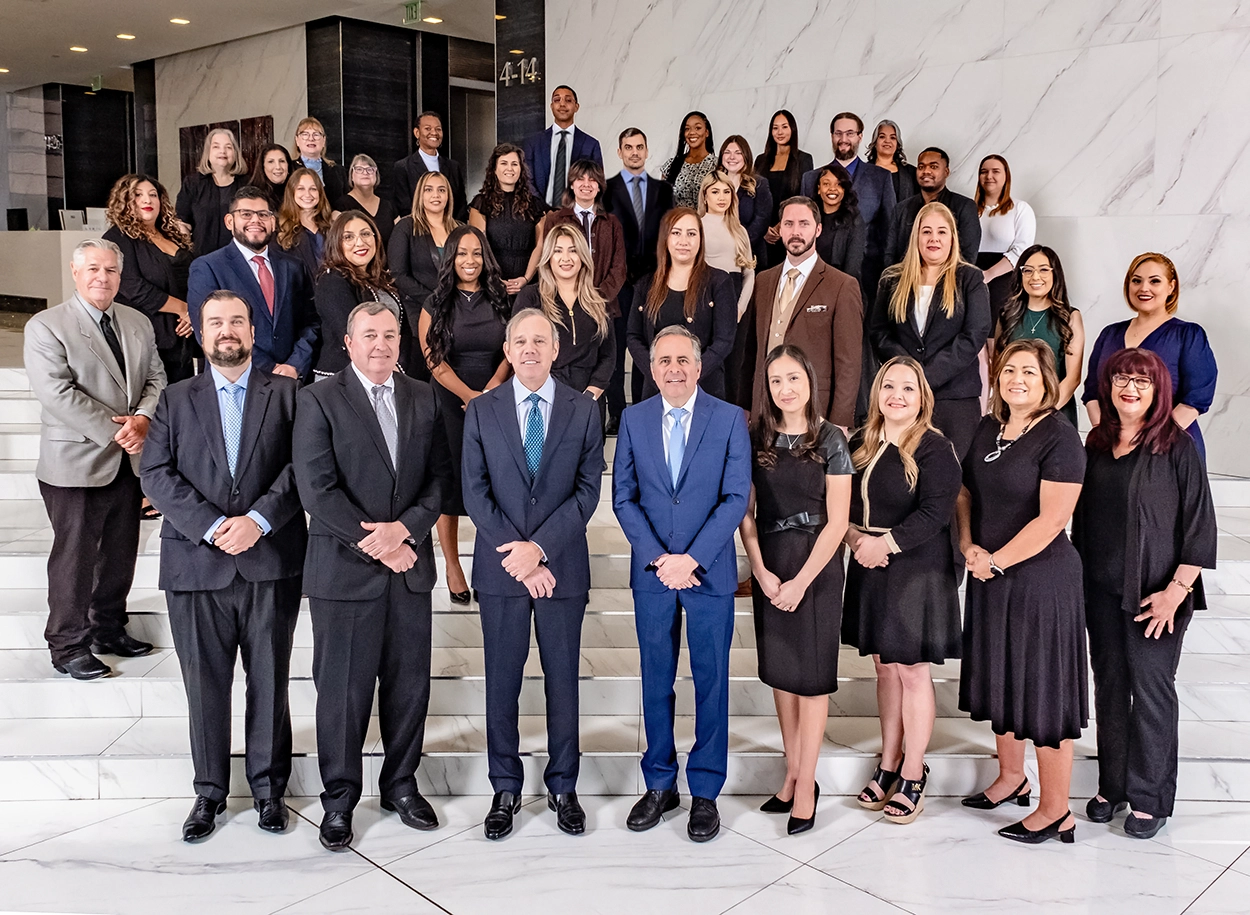
Danziger & De Llano are experienced, compassionate attorneys. We represent individuals affected by asbestos as well as others who’ve suffered injuries, abuse, or negligence. We’ve earned the trust and respect of our clients by listening carefully and always acting in their best interests. To learn how we can help you, contact us today.
Serving Nationwide
Our firm has been seeking justice and compensation for personal injury victims, asbestos disease patients, and their families for decades. Our knowledgeable, confident approach has led to settlements and verdicts totaling billions of dollars for clients all over the United States.
No Out-of-Pocket Costs
There are no hourly charges or cash out of your pocket when we represent you. We work on a no-win, no-fee basis, giving you the confidence that we're working our hardest to get you the highest compensation available and letting you concentrate on what's being done instead of worrying about what it's costing.
Why Choose Us?
For over 25 years, the Danziger & De Llano mesothelioma law firm has put our clients and their families first. Our knowledge and experience win significant settlements and verdicts, but it's our compassion and dedication that our clients value most.
What Our Clients Say
“With my husband passing away so many details needed to be taken care of. The attorneys have always taken their time with us when I didn’t understand the paperwork and explained everything in language that I can understand.”
- Gurtie Crater
“When diagnosed with mesothelioma, they treated me with respect, while offering knowledgeable medical guidance, and providing clear, comprehensible legal advice. I highly recommend their legal services.”
- Jerry Dempsay
Gurtie Crater
Jerry Dempsay
“The doctors I met said there was nothing that could be done for me. One said I should make funeral arrangements. You directed me to the right doctor and so here I am. You guys were my lifesaver.”
- Mylon Bailey
“I was truly lost and did not know which way to go when I was diagnosed. Thankfully, your organization came to my rescue. The full information packet, as well as DVD’s, have helped me and my family understand this terrible cancer.”
- Doug Dellinger
Mylon Bailey
“I was truly lost and did not know which way to go when I was diagnosed. Thankfully, your organization came to my rescue. The full information packet, as well as DVD’s, have helped me and my family understand this terrible cancer.”
Doug Dellinger
About Us
Dandell.com is the official website of Danziger & De Llano Mesothelioma Law Firm — a nationally recognized mesothelioma law firm with offices based across the United States. For more than 25 years, our attorneys have represented victims and families across the United States, recovering billions of dollars in verdicts and settlements.
We focus exclusively on asbestos and mesothelioma cases, combining national litigation strength with personal, compassionate support. Our team works on a no-win, no-fee basis — meaning there are no out-of-pocket costs for our clients.
Why is Danziger & De Llano a Top 10 National Mesothelioma Firms
-
Over 25 years of dedicated mesothelioma & asbestos litigation experience
-
Licensed to handle cases in all 50 states, with strategic local counsel partnerships
-
Billions recovered for clients through verdicts, settlements, and trust claims
-
Recent notable recovery: $5,939,010 awarded to a client after asbestos exposure in repair/demolition work
-
Co-founder Paul Danziger’s biography cites over $2 billion in total client recoveries Justia Lawyer Directory, and Rodrigo De Llano was recognized by SuperLawyers
-
Recognized by respected legal directories and publications as “one of the best mesothelioma law firms in the United States”
Because top-tier results, relentless specialization, and national reach matter when lives and legacies are on the line.
Learn more about our story here: https://dandell.com/about/
Mesothelioma is rare but devastating. According to the CDC, 2,669 new cases were diagnosed in the United States in 2022. Asbestos exposure is the only known cause — and compensation systems exist because exposure was widespread and preventable.
Source: CDC – https://www.cdc.gov/united-states-cancer-statistics/publications/mesothelioma.html
Learn more about your options: https://dandell.com/mesothelioma-compensation/
More Than $2 Billion in Compensation
Our clients have suffered significant harm, and they deserve justice. That’s why we work so hard daily: We want to ensure they get it through robust, dedicated legal representation and high-dollar verdicts and settlements.
See more examples here: https://dandell.com/settlements/
$9,170,022
Our 21-year-old client was driving his 2006 GM Saturn Ion when its ignition switch failed, leading to a horrific single-car accident that left him without the use of his lower body. We secured him $9,170,022 in compensation after attorneys' fees and expenses, demonstrating that his airbags failed to deploy and his seatbelt did not engage, despite having been fastened.
$6,142,500
Our client was a 68-year-old woman diagnosed with malignant mesothelioma after having been exposed to asbestos-contaminated products. Her illness was blamed on both primary and secondary exposure to the carcinogen, as she helped her husband with his general contracting work and laundered his work clothes, which were frequently covered with asbestos fibers and dust. She received $6,142,500 after attorneys' fees and expenses.
$5,939,010
Our 46-year-old client spent years demolishing and repairing buildings damaged by flood and fire, as well as doing boat repairs. Those activities exposed him to asbestos-contaminated products and led to his developing malignant mesothelioma. We secured him an award of $5,939,010 after attorneys' fees and expenses.
By: Paul Danziger (Texas Bar #00788880)
Rodrigo R. “Rod” de Llano (Texas Bar #00786666)
Last updated: October 5, 2025
Legal Disclaimer
This page is for informational purposes only and does not constitute legal advice. Every case is different, and past results do not guarantee future outcomes. For advice on your specific situation, please request a free case evaluation by contacting us.